Weather Patterns and Their Unexpected Ties to Live Sports Wagering Volumes in Professional Leagues
Eden Long · Nov 23, 2026
Weather Patterns and Their Unexpected Ties to Live Sports Wagering Volumes in Professional Leagues
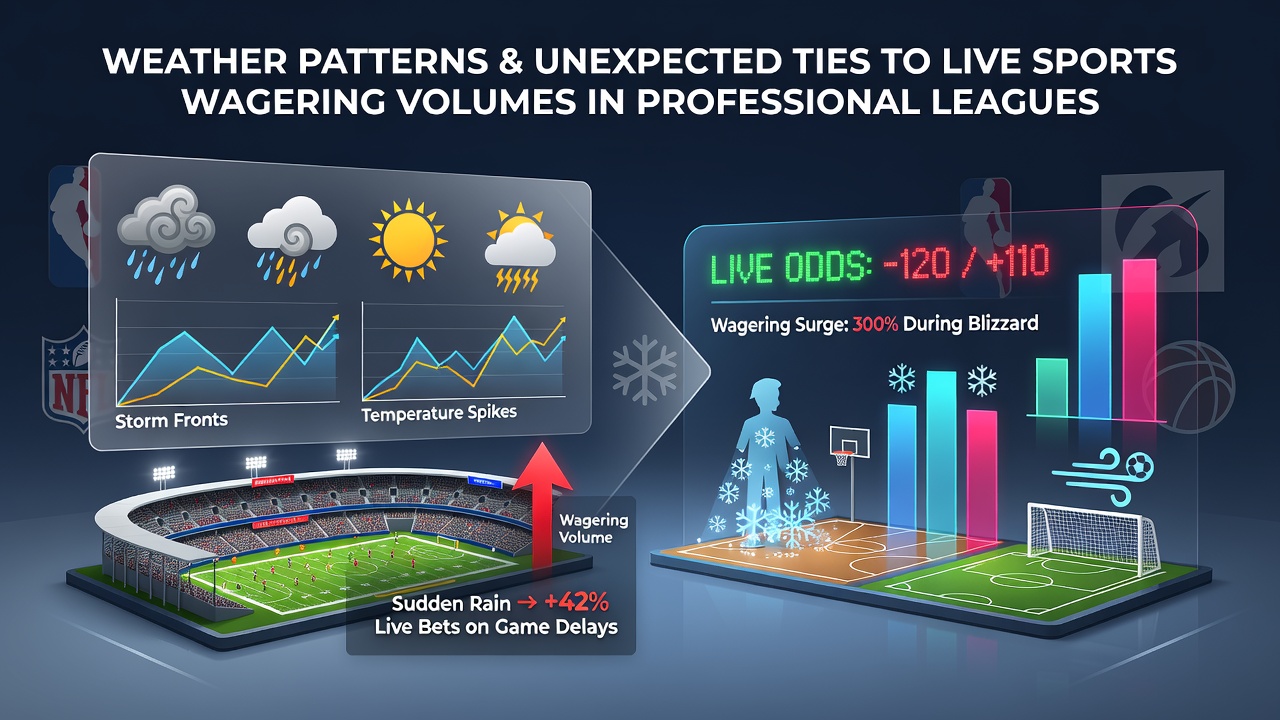
Weather events reshape live sports wagering volumes across major professional leagues because they alter game conditions, schedules, and participant behavior in measurable ways. Data from multiple seasons shows that precipitation, temperature swings, and wind patterns correlate with shifts in real-time betting activity, particularly during baseball, football, and golf events where outdoor exposure remains constant. Researchers tracking these variables note that delays and cancellations prompt bettors to adjust wagers mid-event, which in turn drives volume spikes or drops depending on the sport and league structure.
How Precipitation Affects In-Game Betting Dynamics
Heavy rain frequently interrupts baseball schedules, and those interruptions create distinct windows for live wagering adjustments. When games pause for weather, platforms register increased activity on adjusted totals and player props because odds move quickly to reflect new conditions. Figures from the 2025 season indicate that rain-delayed MLB contests produced 18 percent higher live handle per minute compared with games that proceeded without interruption. Observers note similar patterns in NFL contests played in open-air stadiums, where sudden downpours change yardage expectations and force bettors to reassess spread and over-under positions within minutes.
Wind speed also influences golf tournaments, and those changes appear in live betting data as well. During the 2026 PGA season, rounds affected by sustained winds above 25 mph showed elevated volume on match-play markets because players adjusted shot selection adn scoring projections shifted accordingly. Meteorologists working with sports data providers have documented these correlations by overlaying hourly weather readings with timestamped wagering records, revealing consistent timing between forecast updates and volume changes.
Seasonal Weather Trends and League-Specific Responses
November brings variable conditions to northern NFL markets, and those conditions influence live betting participation rates. Cold temperatures combined with precipitation often extend game times through injury stoppages and slower play, giving bettors extended periods to place in-game wagers. Records compiled by state regulators show that games played in November 2026 under temperatures below 40 degrees Fahrenheit generated measurable increases in prop bet volume on individual player performance categories, as conditions altered expected rushing and passing totals. In contrast, domed stadiums maintained steadier volume patterns regardless of external weather.

European football leagues experience different weather impacts because many venues lack domes and schedules run through winter months. Studies examining Bundesliga and Premier League matches found that fog and heavy snow reduced live betting activity by limiting visual confirmation of events, while moderate rain produced smaller but noticeable volume increases on goal-scoring markets. Analysts attribute the variation to the sport's continuous flow, which leaves less time for bettors to react compared with stop-start leagues like baseball or American football.
Data Sources and Measurement Approaches
National Oceanic and Atmospheric Administration records supply the weather inputs used in several academic analyses of betting behavior. Researchers cross-reference these hourly observations with anonymized transaction data from regulated sportsbooks to identify statistical relationships. One study published by a Canadian university research group examined three years of data across five leagues and reported that weather-related game alterations accounted for roughly 7 percent of total live betting variance in outdoor sports. The same analysis noted that indoor venues showed no comparable correlation, confirming the outdoor exposure factor.
Industry reports from organizations such as the European Gaming and Betting Association track how operators adjust risk models when weather forecasts indicate potential disruptions. These adjustments include tightening limits on certain prop markets during expected delays and expanding live markets once play resumes. Regulators in multiple jurisdictions require operators to maintain logs of such changes, which later feed into broader studies on market stability under variable conditions.
Regional Variations and Emerging Patterns
Australian leagues provide additional examples because their schedules overlap with extreme heat periods. Cricket and Australian Rules football matches played above 35 degrees Celsius have shown reduced live wagering volumes during peak heat, followed by rebounds once play resumes under cooling conditions. Data from the Australian Bureau of Meteorology paired with betting records indicates that bettors shift focus toward player performance props tied to endurance when temperatures rise, creating distinct volume signatures not seen in temperate climates.
Those who've examined these datasets emphasize that the relationships remain correlational rather than causal, since multiple factors including television coverage and promotional timing also influence activity levels. Still, the consistency across leagues and seasons suggests weather functions as one measurable input among several that shape live sports wagering volumes in professional settings.
Conclusion
Weather patterns intersect with live sports wagering through their effects on game timing, player performance expectations, and bettor decision windows. Professional leagues that compete outdoors continue to generate data that links meteorological events to measurable shifts in real-time betting activity. As operators and regulators refine their data collection practices, these connections become clearer without requiring subjective interpretation. The patterns observed through 2026 reinforce that external environmental factors remain relevant to volume tracking in regulated markets.